What Is a Snow Gun? A Guide to Snowmaking Technology, Intelligent Control, and Snow Quality
A snow gun is a key piece of equipment used to produce artificial snow for ski resorts, snow parks, and other commercial ice-snow projects. By atomizing water into small droplets and distributing them into suitable environmental conditions, snow guns help create snow for slopes and recreational areas.
Modern snowmaking technology has moved beyond simple snow production. New-generation systems can combine optimized nozzle design, automatic controls, remote monitoring, and coordinated operation to improve snow quality and make better use of water and energy.
Understanding how snow guns work is important for project owners who are comparing equipment for a new ski resort or commercial snow project.
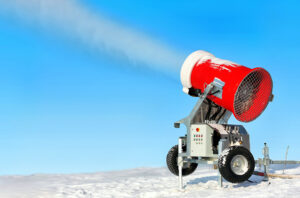
What Is a Snow Gun and How Does It Work?
A snow gun uses water and, depending on its design, compressed air or fan-assisted airflow to create fine droplets that can freeze under suitable atmospheric conditions.
The basic process includes three key stages:
- Water is supplied to the snow gun.
- Nozzles or atomizing components break the water into fine droplets.
- The droplets are distributed through the air and freeze when environmental conditions are suitable.
The actual snowmaking result depends on factors such as air temperature, humidity, water temperature, wind, nozzle configuration, and equipment design.
This is why professional snowmaking is not simply about producing the highest possible water output. The goal is to produce suitable snow quality while using equipment efficiently within the available weather window.
What Are the Technical Advantages of Modern Snow Guns?
Stable Operation Under Challenging Temperature Conditions
Temperature and humidity strongly influence snowmaking performance. When conditions become less favorable, careful equipment selection and system control become increasingly important.
The technical advantages of snow guns for stable operation under high-temperature conditions should therefore be evaluated in terms of their operating range, atomization performance, control accuracy, and ability to respond to changing weather conditions.
A key industry point is that equipment cannot remove the basic physical limits of snowmaking. Instead, advanced systems can help operators make better use of suitable operating periods and manage the equipment more precisely.
How Does Nozzle Design Affect Snow Quality?
The nozzle is one of the most important components of a snow gun.
Influence of Snow Gun Nozzle Design on Artificial Snow Quality and Shooting Range
Nozzle configuration affects how water is atomized and distributed. Droplet characteristics influence freezing behavior, while the overall design affects the distance and pattern of snow distribution.
Project designers should consider:
- Snow particle characteristics
- Water flow
- Throwing distance
- Coverage area
- Wind conditions
- Required snow quality
A longer shooting range is not automatically better. For a commercial project, the better choice is the nozzle configuration that matches the slope layout, weather conditions, and desired snow quality.
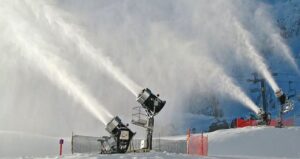
How Can Remote-Control Snow Guns Improve Snowmaking Management?
Modern ski resorts may operate many snow guns across large areas. Manually adjusting every machine can be inefficient, particularly when weather conditions change quickly.
How Remote-Control Automatic Snow Guns Reduce Ski Resort Energy Costs
Remote-control automatic snow guns can help operators monitor equipment status and adjust operation from a centralized control system.
Depending on the system configuration, automatic control may help manage:
- Start and stop times
- Water flow
- Equipment status
- Operating schedules
- Coordination between multiple snow guns
Better control can reduce unnecessary operation and help operators make better use of suitable snowmaking conditions.
However, energy savings are project-specific. Electricity prices, weather, water temperature, pump systems, operating schedules, and equipment configuration all affect total energy consumption.
Domestic vs. Imported Commercial Snow Guns: What Should You Compare?
The performance gap between domestic and imported commercial snow guns cannot be judged simply by country of origin.
Different manufacturers and models can have very different technical specifications and levels of engineering support.
Before purchasing, project owners should compare:
Technical Performance
Review snow output, operating conditions, nozzle systems, control functions, and power requirements.
Project Compatibility
Consider whether the equipment matches the local climate, slope layout, water supply, and project scale.
Service and Maintenance
Spare parts availability, technical support, installation guidance, and long-term maintenance can have a major impact on commercial operation.
For this reason, a complete technical comparison is more useful than choosing equipment based only on purchase price or country of manufacture.
Where Are Snow Guns Used?
Snow guns are widely associated with ski resorts, but commercial snowmaking technology can support different ice-snow applications.
Ski Resorts
Snow guns can help supplement natural snowfall and support snow coverage during suitable weather conditions.
Snow Parks
Commercial snowmaking systems can be designed for recreational snow areas and other winter attractions.
Ice-Snow Tourism Projects
Large tourism projects may combine snowmaking equipment with other refrigeration and environmental systems to create a planned winter experience.
Why Choose Focusun for Snowmaking Solutions?
Focusun has more than 20 years of experience in refrigeration and ice-making technology. The company provides equipment and customized technical solutions for ice and snow applications.
For commercial snowmaking projects, Focusun focuses on matching equipment to actual project conditions rather than using a one-size-fits-all approach.
Project requirements such as local climate, operating conditions, snow coverage, water supply, and control needs should all be evaluated before selecting the final configuration.
FAQ About Snow Guns
What is a snow gun used for?
A snow gun is used to produce artificial snow under suitable environmental conditions. It is commonly used for ski resorts, snow parks, and other commercial snowmaking applications.
Can snow guns operate in high temperatures?
Snowmaking performance depends on temperature and humidity conditions. Advanced equipment and controls can help optimize operation during suitable weather windows, but no snow gun can eliminate the basic environmental requirements for freezing water into snow.
Does nozzle design affect snow quality?
Yes. Nozzle configuration affects water atomization, droplet characteristics, distribution, and shooting range, all of which can influence the resulting snow.
Are automatic snow guns more energy efficient?
Automatic controls can improve equipment management and reduce unnecessary operation, but actual energy consumption depends on the complete system and project operating conditions.
Are imported snow guns always better than domestic models?
No. Performance varies by manufacturer and model. Technical specifications, project suitability, service capability, and total operating cost should be compared before making a decision.
Find the Right Snow Gun Solution with Focusun
Choosing a snow gun is not simply about selecting the highest capacity. The right system should match the project’s climate, snow quality requirements, coverage area, control strategy, and long-term operating goals.
Focusun provides customized snowmaking solutions for ski resorts, snow parks, and commercial ice-snow projects.
Contact Focusun to discuss your project requirements and find a snow gun configuration suited to your application.