

How to Understand Ice & Snow Popular Science: Exploring Ice, Snow Crystal Formation, and Winter Landscape Science
Introduction
Ice and snow are not only beautiful winter scenery but also fascinating natural systems shaped by physics, climate, and environmental conditions.
From a single snow crystal floating in the air to a large ice and snow landscape in a tourism project, every winter scene is connected with the science of water, temperature, and crystallization.
Today, ice and snow knowledge is becoming increasingly important for modern ice and snow parks, winter tourism projects, and themed attractions. Understanding the principles behind natural ice and snow helps designers and engineers create more realistic and sustainable winter experiences.
In this guide, we will explore Ice & Snow Popular Science, including the physical differences between ice and snow, the natural science knowledge of snow crystal formation, and the ecological characteristics of winter ice and snow scenery.
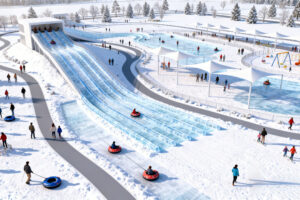
How Are Ice and Snow Different From Each Other?
Understanding the Physical Differences Between Ice and Snow
Ice and snow are both made of water, but their structures and properties are different.
Ice is a solid form of water created when liquid water freezes. Its molecules form a relatively stable structure, creating a hard and dense material.
Common examples include:
- Frozen lakes
- Ice blocks
- Ice sculptures
Snow is different because it is made of many small ice crystals formed in the atmosphere.
A snowflake begins when water vapor freezes around tiny particles in clouds. As the crystal moves through the atmosphere, more water molecules attach to it and create complex patterns.
Why Does Snow Feel Soft While Ice Feels Hard?
The main reason is structure.
Solid ice has a compact crystal arrangement, while snow contains many separate ice crystals with air spaces between them.
Because of this structure, snow is:
- Lighter than ice
- Softer to touch
- Easier to compress
This difference also affects how snow behaves in natural environments and artificial snow projects.
For example:
- Ski slopes need snow with suitable strength and texture.
- Snow playgrounds require softer snow.
- Ice sculptures require stronger frozen structures.
Understanding these differences helps professionals choose suitable methods for creating winter environments.
How Are Snow Crystals Formed in Nature?
Natural Science Knowledge of Snow Crystal Formation
Snow crystal formation is one of the most interesting processes in nature.
A snow crystal starts when water vapor changes directly into ice under cold atmospheric conditions.
During growth, several factors influence the final shape:
- Temperature
- Humidity
- Air movement
Different combinations of temperature and moisture create different crystal forms, including:
- Plates
- Needles
- Columns
- Branching dendrites
Scientists have found that the detailed shape of snow crystals is closely related to temperature and the way water molecules attach to the growing crystal surface.
Why Are Snowflakes Different From Each Other?
Snowflakes often have unique patterns because every crystal experiences a different journey through the atmosphere.
Small changes in:
- Temperature
- Humidity
- Air flow
can change the growth process.
Although many snowflakes have a six-sided structure, their final appearance can vary greatly because of changing environmental conditions during formation.
This natural phenomenon is one reason why winter landscapes always have unique visual characteristics.
How Do Ice and Snow Create Winter Landscapes?
Ecological Characteristics of Winter Ice and Snow Scenery
Winter landscapes are not only beautiful but also important parts of natural ecosystems.
Snow affects:
- Soil temperature
- Water storage
- Plant growth
- Animal survival
A layer of snow can work as natural insulation, protecting the ground from extreme temperature changes.
When snow melts, it becomes an important water resource for many ecosystems.
The Relationship Between Climate and Snow Landscapes
Natural ice and snow scenery is created through the interaction between:
- Temperature
- Moisture
- Wind
- Sunlight
These conditions determine:
- Snow thickness
- Ice formation
- Landscape appearance
For example:
Mountain areas may create deep snow environments, while colder regions may form large ice structures.
The natural environment provides inspiration for modern ice and snow landscape projects.
How Does Ice and Snow Science Support Modern Snow Parks?
Applying Natural Principles to Artificial Ice and Snow Projects
Modern ice and snow parks use scientific knowledge together with advanced engineering technology.
Although artificial snow and ice landscapes are created by equipment, their design still follows natural principles.
Professional projects consider:
- Snow structure
- Temperature control
- Ice stability
- Environmental conditions
For example:
An indoor snow park needs precise temperature management.
An ice sculpture exhibition requires stable freezing conditions.
A tourism ice and snow landscape requires long-term operation planning.
By understanding natural ice and snow science, engineers can create more realistic winter experiences.
How Can Science Improve Ice and Snow Landscape Design?
Combining Nature, Technology, and Visitor Experience
Successful ice and snow projects are not only about producing snow or ice.
They combine:
- Scientific understanding
- Engineering technology
- Landscape creativity
A well-designed winter attraction should consider:
Visual Experience
Creating attractive snow scenes, ice structures, and interactive areas.
Environmental Control
Maintaining stable conditions for long-term operation.
Sustainability
Improving energy efficiency and reducing unnecessary resource consumption.
This approach helps create safer and more valuable ice and snow attractions.
Why Choose Focusun for Ice and Snow Projects?
Building an ice and snow project requires knowledge of refrigeration, ice production, snow systems, and landscape applications.
Focusun provides professional solutions for:
- Ice and snow parks
- Indoor winter attractions
- Ice sculpture projects
- Tourism landscape projects
By combining engineering experience with ice and snow science, Focusun helps customers transform creative ideas into reliable winter environments.
FAQ About Ice and Snow Science
What is the difference between ice and snow?
Ice is a solid structure formed from frozen water, while snow consists of many ice crystals formed in the atmosphere.
How are snow crystals created?
Snow crystals form when water vapor freezes around small particles in cold clouds. Temperature and humidity determine their final shape.
Why are snowflakes usually six-sided?
The molecular structure of ice naturally creates a hexagonal crystal pattern during growth.
Can science help create artificial winter environments?
Yes. Modern ice and snow technologies use knowledge of freezing, crystallization, and temperature control to create realistic winter attractions.
Explore Ice and Snow Science with Focusun
Ice and snow are more than seasonal scenery. They are the result of complex natural processes involving water, temperature, and crystal growth.
By understanding the science behind ice and snow, developers can create better winter attractions and more realistic ice and snow landscapes.
Focusun combines ice-making technology, refrigeration experience, and project knowledge to support customers in building unique ice and snow environments.
Contact Focusun today to explore your ice and snow project and discover how science and technology can create unforgettable winter experiences.