

Turn Heat into Snow! Discover the Power of High-Temperature Snow-Making Technology
Climate change is affecting many industries. Winter tourism is one of them. Many regions no longer have stable cold weather. This creates a serious challenge for snow-related businesses.
High-temperature snow-making machines provide a new solution. These machines allow users to produce real snow in warm environments. The ambient temperature can reach up to 35°C. The system still works reliably.
This technology opens new opportunities. Businesses can now operate in tropical regions. Investors can build projects without climate restrictions. Snow is no longer limited to winter.
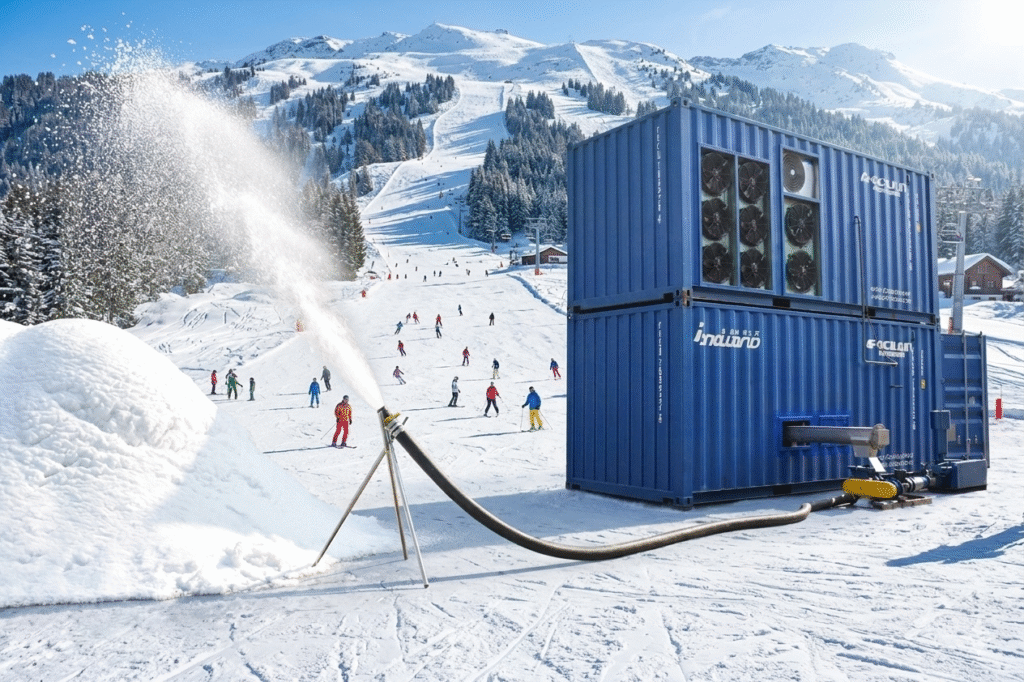
This article explains how the high-temperature snow-making technology works. It also shows real applications and business value. You will understand why more companies are investing in this solution.
What Is a High-Temperature Snow-Making Machine?
A high-temperature snow-making machine is an advanced refrigeration system. The system produces snow in non-freezing environments. The working temperature usually ranges from 5°C to 35°C.
Traditional snow machines depend on cold air. They cannot work in hot climates. This limitation reduces their use.
High-temperature systems solve this problem. They use independent cooling technology. They do not rely on outdoor temperature. This makes them stable and flexible.
Main Components
Each system includes several key parts:
- The compressor drives the refrigeration cycle
- The evaporator freezes water quickly
- The control system manages operation
- The heat exchanger improves efficiency
- The snow-forming unit creates fine snow
Each component plays an important role. The system must operate as a whole.
Technical Features
The machine offers several important features:
- It works at ambient temperatures up to 35°C
- It produces snow at around -5°C to -8°C
- It uses energy-efficient refrigeration technology
- It uses food-grade stainless steel (SUS304)
- It supports customized snow output
These features ensure stable performance. They also improve snow quality.
How Does the Technology Work?
The system follows a clear process. Each step is controlled carefully.
Step 1 – Rapid Freezing
The system first cools water rapidly. The refrigeration unit removes heat from the water. The evaporator forms thin ice layers.
This process is fast. It is also energy-efficient.
Step 2 – Snow Formation
The system then processes the ice. Mechanical components break the ice into particles. These particles become fine snow.
The snow has a natural texture. It looks and feels like real snow.
Step 3 – Temperature Control
The system uses intelligent sensors and automatic control systems. These devices monitor temperature and pressure. They adjust operation in real time.
This ensures stable operation. The system can handle high ambient temperatures.
Technical Insight
Engineers focus on heat exchange efficiency. They also improve thermal insulation design. These factors are critical.
The system reduces heat gain from the environment. It increases cooling efficiency. This balance allows continuous snow production.
Real Application in Hot Climates
Case Study – Indoor Snow Park
A client planned an indoor snow park in a tropical region. The local temperature often reached 30°C to 35°C.
The project faced several challenges:
- The environment had high heat load
- Snow melted quickly
- Energy consumption was a concern
Solution
The project team installed a high-temperature snow-making system. They improved building insulation. They also optimized airflow design.
The team added a cold storage system. This system helped preserve the snow.
Results
The system performed well. It produced stable snow output throughout the day. Visitors enjoyed a realistic snow experience. The project reduced operational costs.
This case proves a key point. Location is no longer a limitation.
Application Scenarios
High-temperature snow machines serve many industries. Businesses use them in different ways.
Indoor Ski Resorts
Operators use these machines to create indoor ski slopes. They offer year-round skiing. Customers do not depend on winter seasons.
Snow Theme Parks
Developers build snow theme parks for families. These parks attract tourists. They increase visitor traffic.
Commercial Events
Event organizers use snow machines for snow events and exhibitions. Brands use them for marketing campaigns.
Film and Television
Production teams need real snow effects. These machines provide authentic snow. They improve visual quality.
Shopping Malls
Shopping centers install snow attractions. These features increase foot traffic. They improve customer experience.
Why Should You Invest in This Technology?
- No Climate Limitations
Businesses can operate anywhere. Warm regions are no longer a barrier. This expands market opportunities.
- High Return on Investment
Projects can run all year. Revenue is stable. Investors achieve faster ROI (Return on Investment).
- Energy Efficiency
Modern systems use optimized refrigeration systems. They reduce power consumption. This lowers operating costs.
- Better Customer Experience
The machine produces fine and dry snow. The snow feels natural. Customers enjoy a premium snow experience.
Industry Experience
Manufacturers have years of experience in industrial refrigeration technology. Many companies serve global markets. They deliver projects in multiple countries.
These companies follow international certifications such as CE standards. This ensures product reliability and safety.
Maintenance and Operation
Proper maintenance is important. It ensures long-term performance.
Daily Tasks
Operators should check system pressure. They should monitor temperature levels. They should inspect water quality.
Weekly Tasks
Technicians should clean the evaporator system. They should inspect airflow circulation.
Monthly Tasks
Engineers should check refrigerant levels. They should test control system stability.
Regular maintenance extends machine lifespan. The system can operate for 15 to 20 years.
Service Support
Professional suppliers provide full lifecycle support. They offer installation guidance. They provide operator training. They also offer remote technical support.
This support ensures stable and reliable operation.
Return on Investment Analysis
High-temperature snow projects offer strong financial potential.
Typical results include:
- Payback period: 1 to 3 years
- Visitor increase: 30% to 70%
- Year-round operation capability
These factors increase business revenue. They also reduce seasonal risk.
Businesses can maintain stable cash flow. This is a major advantage.
Frequently Asked Questions
Q1: Can the machine work at 35°C?
Yes. The high-temperature snow-making machine is designed for hot environments. It operates efficiently above 30°C.
Q2: What type of snow does it produce?
The machine produces real snow. The snow is dry, fine, and natural.
Q3: Is the system energy-efficient?
Yes. The system uses advanced refrigeration technology. It reduces energy consumption.
Q4: How long does the machine last?
The system can last 15–20 years with proper maintenance.
Q5: Can the system be customized?
Yes. Engineers provide customized solutions based on project needs.
Conclusion – Build Your Snow Business Today
High-temperature snow-making technology is transforming the industry. It removes climate limitations. It creates new business opportunities.
Investors can build projects in any region. Operators can run businesses all year round. Customers can enjoy real snow anytime.
This technology is both innovative and profitable.
👉 Contact us today to get a customized snow project solution and ROI analysis for your 2026 plan.